Heating & Cooling
Average Monthly Heating Bill by State: What Winter Costs in Every State
Quick answer
A home that heats with natural gas pays about $113 a month for heat from November through March, and about $168 in January. Electric heat averages $79 a month, propane $180 and heating oil $309. By state, in the main fuel most homes use there, the average winter month runs from about $35 in Arizona to $367 in New Hampshire.
On this page
- What is the average monthly heating bill?
- What does heating cost per month in each state?
- Which states have the highest and lowest heating bills?
- Why does your main fuel matter more than the weather?
- Will heating bills be higher this winter?
- Why can your heating bill be different from your state's average?
- How can you lower your monthly heating bill?
- How was this calculated?
- FAQ
- Sources
There is no single heating bill, because homes heat with different fuels. Most use natural gas, many use electricity, and in New England a lot still burn heating oil. What you pay in a winter month depends on the fuel, its price in your state, how cold the month is and how much house you are heating. This guide puts those together for every state.
The short version: for the average home that heats with each fuel, the winter month costs about $113 with gas, $79 with electricity, $180 with propane and $309 with heating oil, and the typical state lands near $100. The state table is below, after the national picture. For the gas-only view, my average natural gas bill by state guide goes deeper.
What is the average monthly heating bill?
It depends first on the fuel. The Energy Information Administration (EIA) measured, in its 2020 household survey, how much energy the average home uses for space heating, separately for homes that heat with gas, electricity, propane and oil. I priced that use at what each fuel cost last winter, from November 2025 to March 2026, and spread the heating that falls in those five months over five months. The coldest month, January, carries more than the others: in the gas data, about 30% of the winter's heating happens in January.
| Heating fuel | Price | Avg. month | January | Winter |
|---|---|---|---|---|
| Natural gas | $14.65 per 1,000 cu ft | $113 | $168 | $567 |
| Electricity | 17.8 cents per kWh | $79 | $117 | $395 |
| Propane | $2.58 per gallon | $180 | $266 | $898 |
| Heating oil | $4.09 per gallon | $309 | $458 | $1,545 |
What the average home that heats with each fuel pays for space heating in a winter month, at the prices of last winter (November 2025 to March 2026). The use is the average of the EIA's 2020 household survey for homes that use that fuel for heat, including secondary heat. The winter figure spreads the share of the year's heating that falls in November through March over five months, and January is the coldest of them. Electricity includes heat pumps as well as electric furnaces and baseboard heaters.
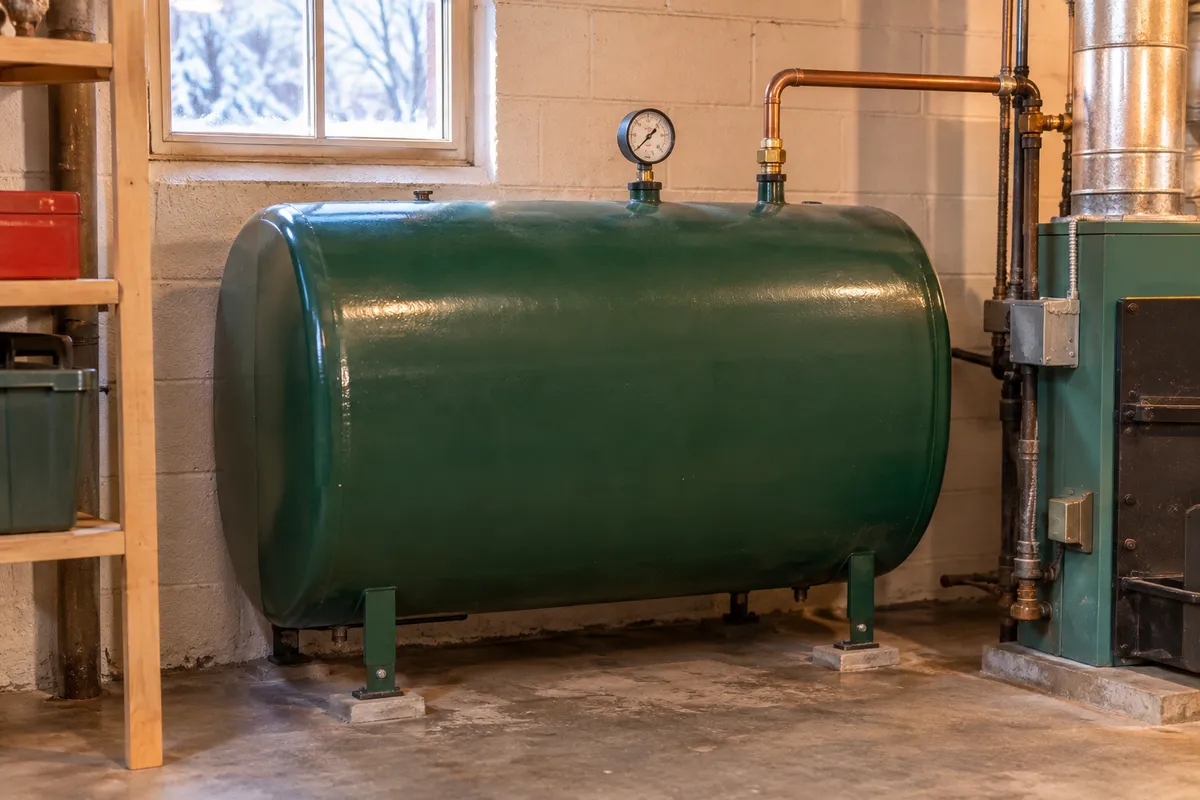
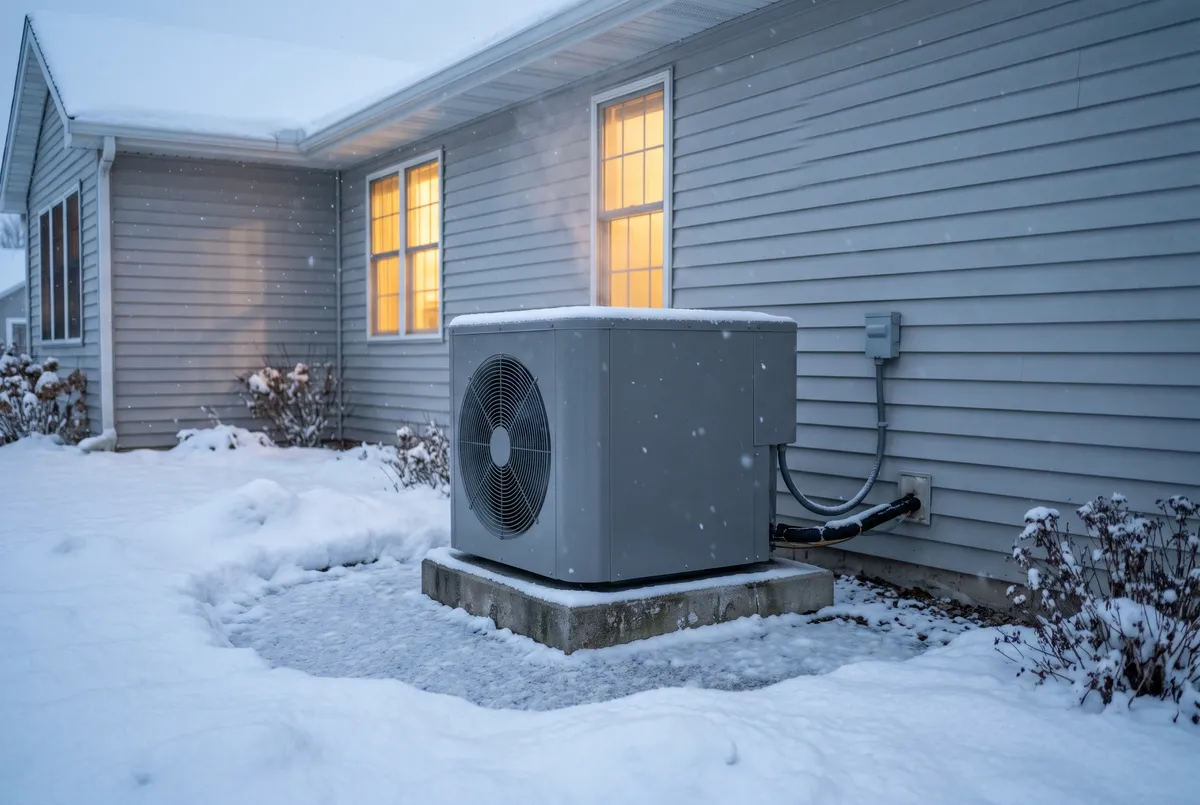
Heating oil costs the most per month, about 2.7 times a gas home, and propane comes second. Electricity looks cheap here, at $79, but the average covers every home that heats with electricity, including those in warm states and those with heat pumps, which deliver more than one unit of heat for each unit of electricity. A home that heats with plain electric resistance in a cold state pays much more than this number. For that case, see my heat pump vs gas furnace comparison by state.

What does heating cost per month in each state?
The table shows, for each state, the fuel that most homes use as their main heating fuel and what a home using it pays in an average winter month and in January. In 30 of the 50 places listed gas is the main fuel, in 17 it is electricity, and in 3 (Maine, New Hampshire, Vermont) it is heating oil. A state with a mild winter and a cheap fuel can cost a fraction of a cold state with an expensive one.
| State | Main fuel | Homes | Avg. month | January |
|---|---|---|---|---|
| Alabama | Electricity | 68% | $88 | $149 |
| Alaska | Gas | 49% | $191 | $227 |
| Arizona | Electricity | 61% | $35 | $55 |
| Arkansas | Electricity | 53% | $90 | $127 |
| California | Gas | 61% | $69 | $102 |
| Colorado | Gas | 68% | $91 | $127 |
| Connecticut | Gas | 36% | $145 | $193 |
| Delaware | Gas | 42% | $120 | $167 |
| District of Columbia | Electricity | 52% | $57 | $82 |
| Florida | Electricity | 89% | $42 | $62 |
| Georgia | Electricity | 57% | $59 | $97 |
| Idaho | Gas | 51% | $59 | $87 |
| Illinois | Gas | 76% | $119 | $179 |
| Indiana | Gas | 59% | $111 | $166 |
| Iowa | Gas | 61% | $100 | $151 |
| Kansas | Gas | 63% | $118 | $175 |
| Kentucky | Electricity | 55% | $109 | $179 |
| Louisiana | Electricity | 63% | $46 | $68 |
| Maine | Heating oil | 50% | $300 | $444 |
| Maryland | Gas | 44% | $128 | $176 |
| Massachusetts | Gas | 52% | $213 | $284 |
| Michigan | Gas | 75% | $128 | $183 |
| Minnesota | Gas | 67% | $115 | $167 |
| Mississippi | Electricity | 57% | $84 | $150 |
| Missouri | Gas | 49% | $152 | $247 |
| Montana | Gas | 52% | $85 | $120 |
| Nebraska | Gas | 59% | $101 | $158 |
| Nevada | Gas | 61% | $42 | $65 |
| New Hampshire | Heating oil | 36% | $367 | $543 |
| New Jersey | Gas | 75% | $151 | $207 |
| New Mexico | Gas | 62% | $70 | $104 |
| New York | Gas | 60% | $133 | $183 |
| North Carolina | Electricity | 66% | $76 | $125 |
| North Dakota | Gas | 43% | $97 | $140 |
| Ohio | Gas | 64% | $130 | $193 |
| Oklahoma | Gas | 51% | $98 | $145 |
| Oregon | Electricity | 55% | $88 | $125 |
| Pennsylvania | Gas | 52% | $145 | $209 |
| Rhode Island | Gas | 54% | $234 | $319 |
| South Carolina | Electricity | 70% | $83 | $126 |
| South Dakota | Gas | 48% | $87 | $126 |
| Tennessee | Electricity | 63% | $94 | $158 |
| Texas | Electricity | 60% | $67 | $131 |
| Utah | Gas | 79% | $81 | $125 |
| Vermont | Heating oil | 36% | $306 | $418 |
| Virginia | Electricity | 58% | $80 | $113 |
| Washington | Electricity | 61% | $96 | $122 |
| West Virginia | Electricity | 48% | $148 | $216 |
| Wisconsin | Gas | 65% | $118 | $175 |
| Wyoming | Gas | 60% | $109 | $148 |
Estimated space-heating bill in each state for a home that heats with the state's most common main fuel, from the winter of 2025-26 (November to March). "Homes" is the share of the state's homes that use that fuel as their main heating fuel (Census ACS 2025). The average month is the winter total divided by five. Alaska is included; Hawaii is left out because almost no homes there use heating fuel. 49 states and Washington, D.C.
The middle of the table is a state like Iowa, at about $100 a month. January runs from about $55 in Arizona to $543 in New Hampshire. Each figure is the average for a home that heats with the state's main fuel. A home that uses a different fuel in the same state will pay something else, and I show how that works in the fuel section below.
Which states have the highest and lowest heating bills?
The highest bills are in the states that heat with oil. New Hampshire comes first at $367 a month in an average winter month, then Vermont ($306) and Maine ($300). Oil homes use a lot of heat in a cold climate and pay about $4.09 a gallon, which is expensive per unit of energy. Rhode Island ($234) and Massachusetts ($213) are the most expensive places to heat with gas, because their winters are cold and their gas is dear: about $20.99 per thousand cubic feet in Rhode Island and $25.63 in Massachusetts, against a U.S. average of $14.65. Alaska ($191) comes next, because its gas homes use more heat than any other state's in the table, about 94.5 million Btu a year.
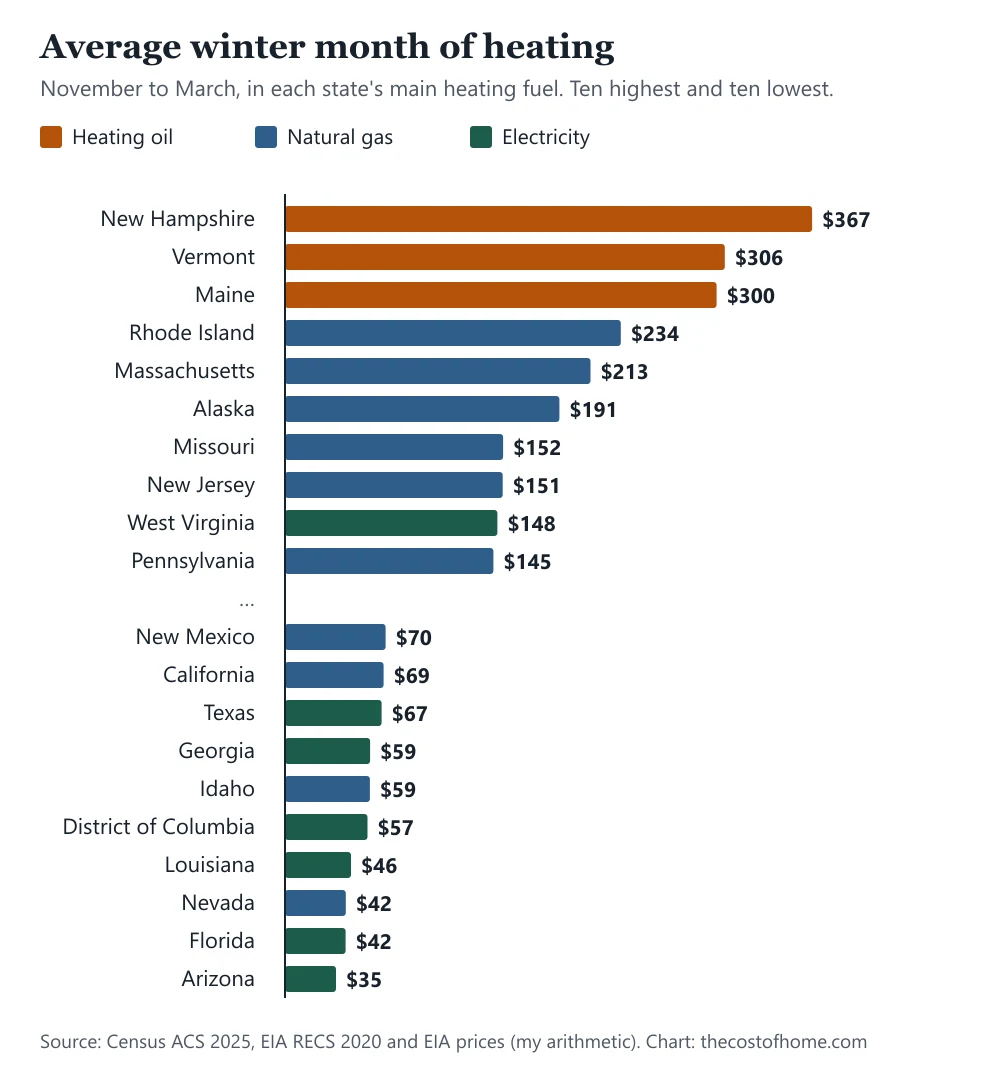
At the bottom, Arizona ($35), Florida ($42), Nevada ($42) and Louisiana ($46) have mild winters, so the heating bill is a small part of the year. Idaho shows a different reason: its winters are cold, but its gas is the cheapest per unit among the states in the table, about $7.06 per thousand cubic feet. The state is a better guide than the weather alone.
Why does your main fuel matter more than the weather?
Because the same amount of heat costs very different amounts depending on how you buy it. At last winter's national prices, a million Btu of energy bought as natural gas costs about $14. As propane it costs about $28, as heating oil about $30, and as electricity about $52. Electricity looks like the worst deal, but that is for resistance heating, which turns each unit of electricity into one unit of heat. A heat pump that delivers about 2.5 units of heat per unit of electricity, an assumption I use in my heat pump cost guide, brings electricity down to about $21 per million Btu of heat. Furnace efficiency also changes the comparison, and I cover it in my guide to what a furnace costs per month.
That is why Maine and Minnesota, both cold states, end up far apart: a home heating with oil in Maine pays about $300 in an average winter month, while a gas home in Minnesota pays about $115. The same applies if you heat with propane, which costs more per unit of energy than gas; I compare the two in propane vs natural gas heating cost.
Will heating bills be higher this winter?
It depends on the fuel again. The EIA's Winter Fuels Outlook, in the version updated with its November 2026 Short-Term Energy Outlook, expects the average household that heats with each fuel to spend this winter, from November through March: $640 for natural gas (-9% from last winter), $1,186 for electricity (+3%), $1,260 for propane (-2%) and $2,179 for heating oil (+25%). These are the whole winter's spending on that fuel, including water heating and other uses, so they are larger than the heating-only figures above, and they depend on the weather the EIA assumes. A colder winter would raise them.
The big change is heating oil. The EIA's weekly survey put the average residential price at $5.915 a gallon on November 9, 2026, against $3.721 a year earlier. If you heat with oil in Maine, New Hampshire, Vermont or another Northeast state, expect last winter's oil figures above to run higher. I follow the price in heating oil cost this winter, and the full forecast by region is in winter heating costs 2026-27.
Why can your heating bill be different from your state's average?
The table is an average of homes that heat with a state's main fuel. Six things move your own bill most:
- Your fuel. Homes in the same state heat with gas, electricity, propane and oil, and the table shows only the most common one. Even in a state where most homes use gas, the home next door may use propane.
- Your home. A larger or older house with little insulation needs more heat. A small apartment needs less, and an apartment that shares walls with neighbors loses less heat.
- Your equipment. A heat pump uses much less electricity than baseboard heaters for the same warmth, and a newer furnace wastes less fuel.
- Your thermostat. The Department of Energy says turning the thermostat down 7°F to 10°F for 8 hours a day can save as much as 10% a year on heating and cooling.
- Your price. The state figure blends every utility and every fuel dealer. Your rate, delivery charge and monthly fee decide your bill, and oil and propane are priced by the gallon, so local dealers can differ widely. My guide to how to read your natural gas bill shows where each charge goes.
- The weather. A cold January can cost much more than an average one. Use January, not the five-month average, as your budget month.
In my opinion, the number to budget with is January, because a single cold month decides whether a winter feels expensive. If your January bill is far above the table, check the thermostat, the filter and the ducts before blaming the fuel.
How can you lower your monthly heating bill?
- Turn the thermostat back while you sleep or are out. The 7°F to 10°F for 8 hours a day setback above is the Department of Energy's example. My smart thermostat savings guide prices what a smart one can add.
- Seal air leaks and add insulation. The EPA's ENERGY STAR program estimates that sealing and insulating saves an average of 15% on heating and cooling costs. See attic insulation cost and savings for the price and payback.
- Change the furnace filter. The Department of Energy says to clean or replace furnace filters once a month or as recommended, which keeps the system running efficiently.
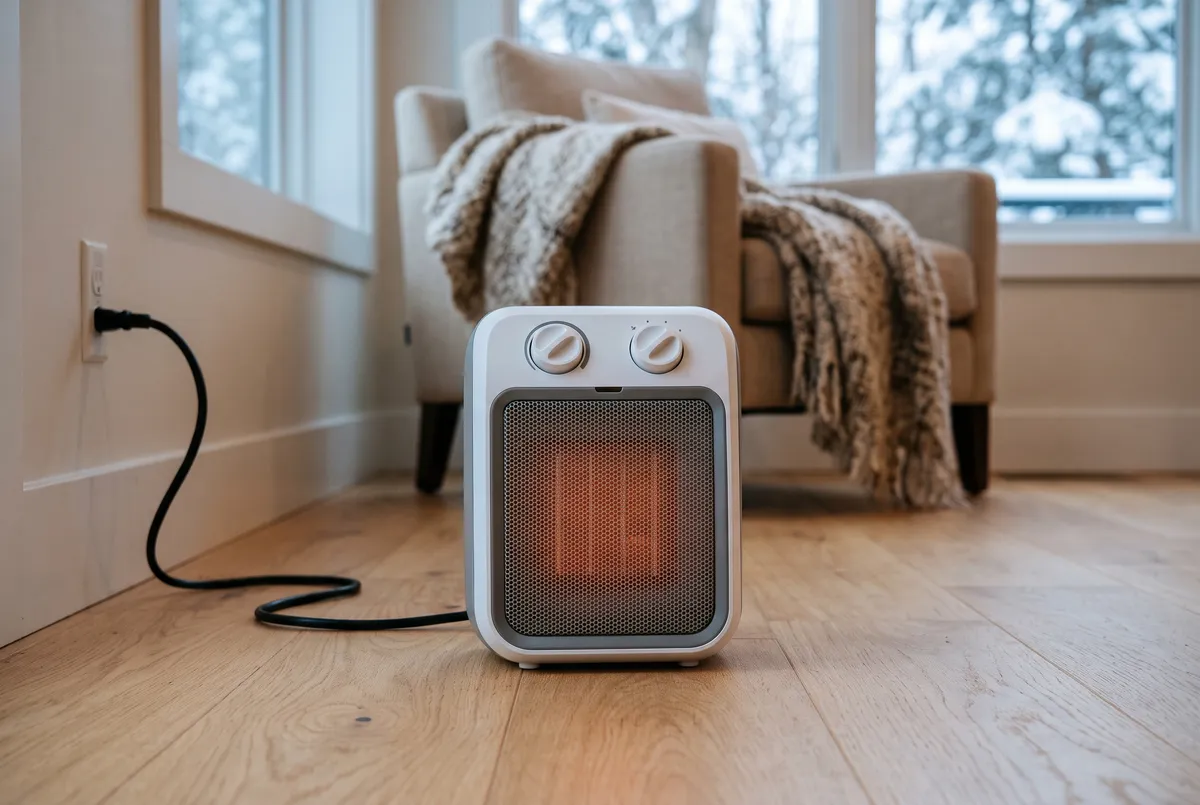
- Be careful with space heaters. A plug-in heater is resistance heat, the most expensive way to buy a unit of heat in the table above. I price one in space heater cost to run.
- Ask about help. If the bill is more than your budget can carry, state programs are taking applications now. My LIHEAP guide covers who qualifies and how to apply.
How was this calculated?
Four pieces go into each state's figure. First, the main fuel is the one the most homes use according to the Census Bureau's American Community Survey of 2025 (table B25040), among gas from a utility line, propane, electricity and heating oil. Second, the use is the EIA's 2020 Residential Energy Consumption Survey (table CE4.6, by state): the million Btu a home that heats with that fuel uses for space heating in a year, including secondary heat. Third, the price is what the fuel cost in that state last winter, November 2025 to March 2026: the EIA's residential gas and electricity prices weighted by volume, the average of the EIA's weekly residential propane price, and the EIA's weekly heating oil price (for states without an oil series, the region's price). Fourth, the shape of the year: I took how much gas residential customers in each state burned above the summer level to find the share of the year's heating that falls from November to March, and how much of that falls in January. For 10 states without a complete monthly series (California, Florida, Kansas, Louisiana, Maine, New Hampshire, New Mexico, Ohio, Oklahoma, Wisconsin), I used the U.S. shape. The average month is the winter total divided by five.
Three limits apply. The 2020 survey is the latest edition, and weather and prices change from year to year, so a colder winter will cost more than the table. The figures are heating only: water heating, cooking and lights are not included. And they are averages for a state, not forecasts for your home. This is a different method from my furnace cost guide, which measures the gas a furnace burned last winter above the summer level; January in Massachusetts comes to about $284 here and about $364 there. Wood heat is not priced. I explain my sources and arithmetic in how I research costs, and more guides on heating and cooling are in the Heating & Cooling section.
Frequently asked questions
What is the average monthly heating bill?
For a home that heats with natural gas, about $113 a month from November through March and about $168 in January. Electric heat averages $79 a month, propane $180 and heating oil $309, at last winter's prices.
Which state has the highest heating bill?
New Hampshire, at about $367 in an average winter month for a home that heats with oil, its most common fuel, followed by Vermont ($306) and Maine ($300). Oil states have the highest bills because oil costs more per unit of heat than gas.
Which state has the lowest heating bill?
Arizona, at about $35 in an average winter month, followed by Florida ($42) and Nevada ($42). Mild winters keep the bill small in these states.
Is it cheaper to heat with gas, electricity, propane or oil?
At last winter's national prices, natural gas costs about $14 per million Btu of energy, propane about $28, heating oil about $30 and electricity about $52 for resistance heating. A heat pump delivers more than one unit of heat per unit of electricity, which can bring electric heat closer to gas.
Will my heating bill be higher this winter?
It depends on the fuel. The EIA's November 2026 outlook expects the average household's winter bill to move -9% for natural gas, +3% for electricity, -2% for propane and +25% for heating oil compared with last winter. A colder winter than the EIA assumes would raise them.
How much is a heating bill in January?
January is the coldest month and carries the most heating. For a gas home it is about $168 on average, and by state from about $55 in Arizona to $543 in New Hampshire in each state's main fuel.
How can I lower my monthly heating bill?
Turn the thermostat back 7°F to 10°F for 8 hours a day, which the Department of Energy says can save as much as 10% a year on heating and cooling, seal air leaks and add insulation, and change the furnace filter regularly. State programs such as LIHEAP can also help pay a heating bill.
Sources
- U.S. Census Bureau, American Community Survey 2025 1-year estimates, Table B25040, House Heating Fuel, by state (accessed November 15, 2026)
- U.S. Energy Information Administration, 2020 Residential Energy Consumption Survey, table CE4.6 by state: average household site end-use consumption, natural gas (also the electricity, propane and fuel oil versions, ce4.6.el.st, ce4.6.lp.st and ce4.6.fo.st; accessed November 15, 2026)
- U.S. Energy Information Administration, Natural Gas Prices: average residential price by state, monthly (accessed October 16, 2026)
- U.S. Energy Information Administration, Natural Gas Consumption by End Use: residential volumes by state, monthly (data for August 2025 to July 2026, accessed October 16, 2026)
- U.S. Energy Information Administration, Electricity Data Browser: average price and sales to residential customers by state, monthly (November 2025 to March 2026; accessed October 16, 2026)
- U.S. Energy Information Administration, Weekly Heating Oil and Propane Prices: residential propane and No. 2 heating oil by state and region, dollars per gallon excluding taxes (weeks through November 9, 2026; accessed November 12, 2026)
- U.S. Energy Information Administration, Table WF01: seasonal household consumption, prices and expenditures by heating fuel, winter 2026-27 forecast, version updated with the November 2026 Short-Term Energy Outlook (accessed November 12, 2026)
- U.S. Energy Information Administration, British thermal units (Btu): propane 91,452 Btu per gallon; heating oil 138,500 Btu per gallon; 1 kilowatt-hour = 3,412 Btu (accessed October 22, 2026)
- U.S. Energy Information Administration, "How do I convert natural gas prices in dollars per cubic feet to dollars per British thermal unit or therm?" (1,037 Btu per cubic foot in 2025)
- U.S. Department of Energy, Tips on Saving Money and Energy in Your Home (2022 edition; thermostat setback and furnace filters; accessed October 22, 2026)
- ENERGY STAR, "Methodology for Estimated Energy Savings": the 15% estimate for air sealing and insulation (undated; accessed October 25, 2026)

Founder and editor, The Cost of Home
I write and check every guide on this site myself, working from public data. The sources behind each number are listed at the end of the article, so you can check them too.